Research Themes and Projects
I study transport phenomena in alloy microstructures, and develop synthesis and fabrication methods for multiscale material designs, to develop structural materials designs which can accommodate and autonomously heal defects.
Featured
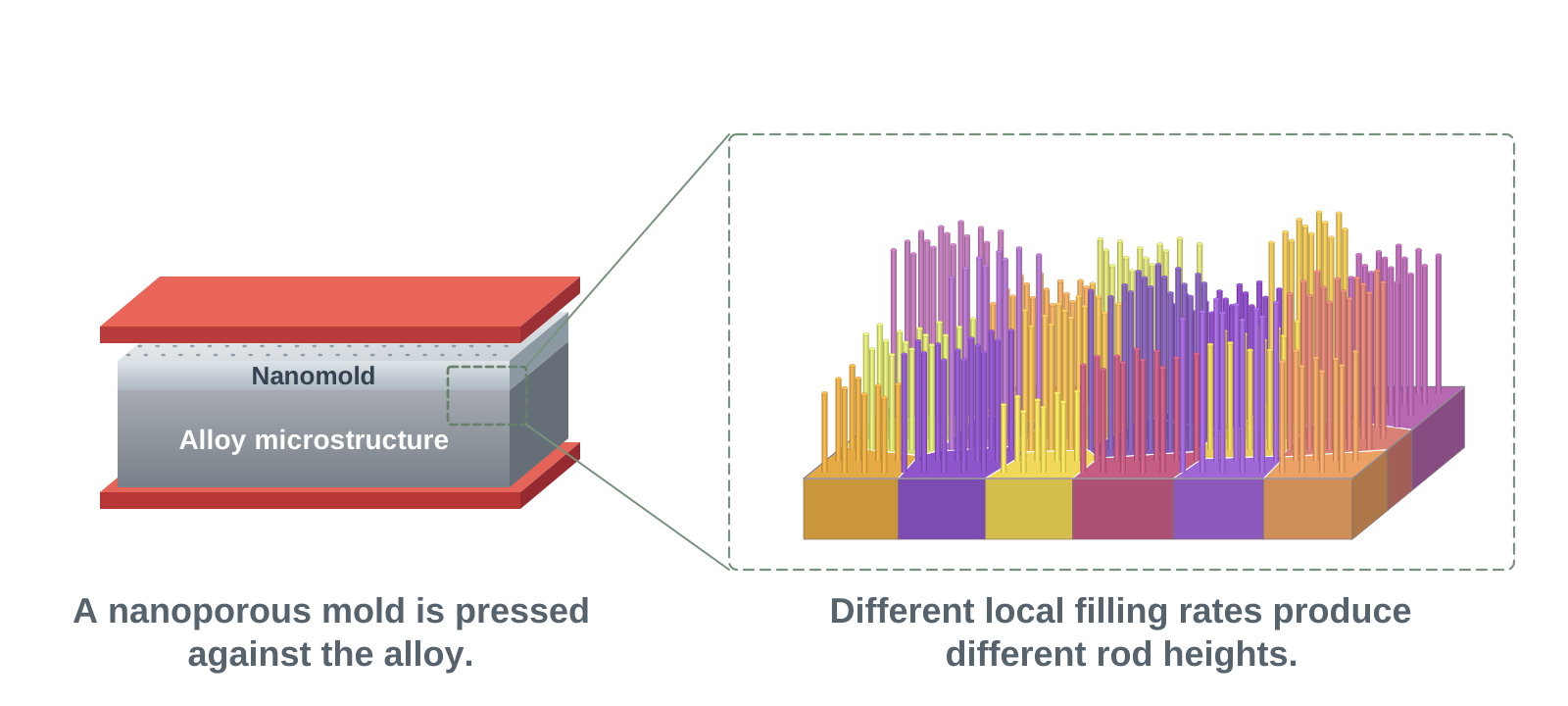
Local deformation mapping uses thermomechanical nanomolding to reveal spatial variations in atomic transport across alloy microstructures, mapping diffusivity as a function of variations in the microstructural features.
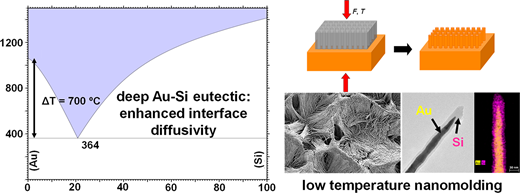
Enhanced diffusion at gold–silicon eutectic interfaces enables thermomechanical nanomolding at low temperatures, including room-temperature fabrication of gold and gold–silicon nanostructures.
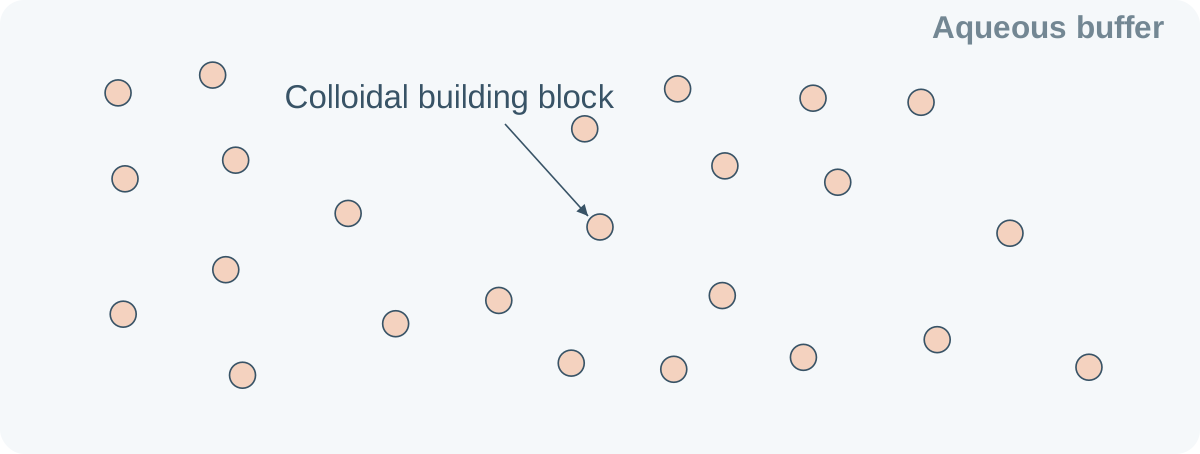
My current research explores how programmable DNA-bonds control nanoscale organization and the formation of ordered materials. Complementary single strands of DNA interact, guiding nanoparticles into extended assemblies. Publications coming soon!
Additional research
Low-dose helium irradiation increases hardness in zirconium-based metallic glass without observed nanocrystals. At higher doses, nanoindentation measurements show a decrease in hardness.
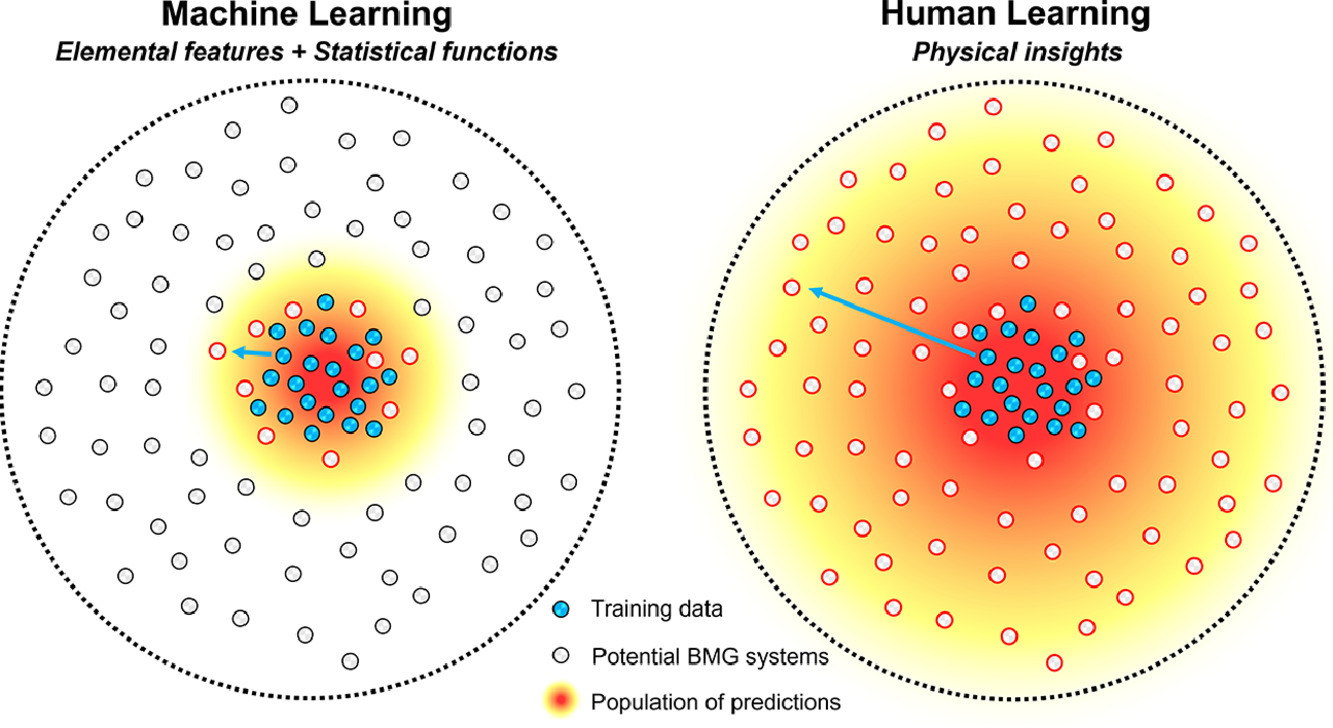
Comparing machine learning with physical insight shows the limits of elemental descriptors for predicting glass formation and highlights the importance of alloy mixing behavior.